What Is Beauty Tech? Everything to Know in 2026

Shoppers today expect more than packaging or influencer-driven hype. They want beauty that fits their needs, solves real problems, and feels personal. That's where beauty tech comes in. From skin scans to virtual try-ons and AI-powered diagnostics, these technologies are helping brands solve discovery gaps, reduce returns, and build lasting trust.
In this blog, we break down what beauty tech really means in 2026, why it's a strategic advantage for brands, which technologies are making the biggest impact, and how you can implement them effectively across digital and physical channels.
Key Takeaways
- Beauty tech enables product experiences that are intelligent, visual, and personal
- AI and AR help beauty brands increase conversions, reduce returns, and personalise engagement
- Data-backed storytelling builds deeper trust and credibility with digital-native consumers
- Cross-channel tech adoption improves continuity across DTC, retail, and app
- Platforms like Orbo offer beauty brands a ready-to-use tech stack to power try-ons, diagnostics, and AI-guided discovery
What is Beauty Tech?
Beauty tech refers to the use of technologies like artificial intelligence, augmented reality, connected devices, and data platforms to improve the customer experience, product performance, and brand operations within the beauty category. It helps brands build personalised, interactive, and data-rich journeys across online, in-store, and at-home settings.
This includes:
- AI-powered skin diagnostics and personalised product recommendations
- AR-based try-ons for makeup, hair, nails, and accessories
- Smart mirrors and connected tools in stores or salons
- Generative AI for intelligent product discovery
- Ingredient traceability and clean beauty transparency tools
Beauty tech is the operational layer that makes modern beauty commerce work, and in 2026, it's become the competitive edge for brands that want to offer both performance and experience.
Why Beauty Brands Should Invest in Technology
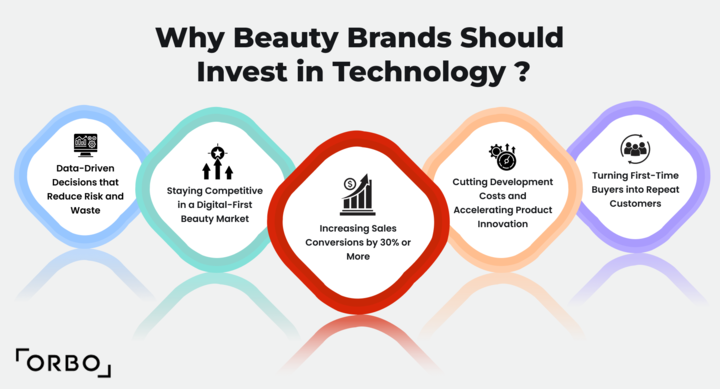
In a category defined by fast-moving trends and digitally native audiences, innovation isn’t just a matter of staying relevant; it’s a measurable way to influence discovery, conversion, and loyalty. Beauty tech gives brands the ability to meet customer expectations in real time while building smarter operations in the background.
Staying Competitive in a Digital-First Beauty Market
Your customer is comparing three products, checking reviews, and trying on colours in real-time. Without tech, you're invisible at that moment. With it, you become part of her decision-making process.
Increasing Sales Conversions by 30% or More
Platforms like Orbo help brands show customers how the product fits their exact skin tone, skin needs, and preferences. This clarity removes doubt and increases buying confidence, resulting in almost 30% higher conversion rates.
Cutting Development Costs and Accelerating Product Innovation
When you can test product-market fit digitally, run simulations before going to production, or get real-time user feedback from AR trials, you build smarter, not just faster.
Turning First-Time Buyers into Repeat Customers
Once a user interacts with a tech touchpoint like a personalised routine builder or smart mirror, you have the chance to remarket based on what they need, not just what they browsed. That keeps engagement personal and high-retention.
Data-Driven Decisions that Reduce Risk and Waste
AI Beauty Tech solutions help brands stop guessing and start planning with clarity on product bundles, shade extensions, and formula changes. From fewer returns to better merchandising, the results show up across the funnel.
5 Core Technologies Reshaping Beauty Commerce
Let’s look at the key technologies driving this shift and how they’re shaping real customer experiences:
AI‑powered Skin Diagnostics and Personalised Product Matching
Modern skin diagnostics use computer vision + deep learning to assess a selfie and extract detailed skin condition data. The pipeline typically works like this:
- User uploads a selfie via mobile/desktop.
- The system aligns the face (normalizes orientation, lighting, cropping) and segments facial regions (forehead, cheeks, chin, etc.).
- A deep neural network (often convolutional + transformer layers) analyses texture, colour, pore size, oiliness/hydration levels, pigmentation, and other markers.
- The analysis returns a quantitative skin profile (e.g., hydration index = X, pigment cluster = Y).
- A recommendation engine maps that profile to product formulations, shades, routines, or skincare regimens.
From the example platform’s specs: “deep facial model detects and tracks 209 landmarks … skin segmentation, tone, texture … frequency localization, transformers, recommendation system.”
This means you can skip generic “one‑size‑fits‑all” skincare claims and instead offer experiences that feel like a personalised consultation in seconds.
Give Orbo’s AI Skin Analysis a Try
AR Virtual Try‑Ons for Makeup, Hair Colour, Nails, and Accessories
Virtual try‑on is powered by facial landmark detection + 3D rendering + physics-based texture simulation. Here’s how it functions under the hood:
- A model detects ~ 200 facial landmark points (eyes, lips, cheeks, jawline) in real‑time video.
- The system segments relevant regions (lips, skin, hair, nails) and overlays virtual product layers (lipstick shade, hair dye, nail polish) that adapt to user movements and lighting.
- For hair colour: hair‑segmentation algorithms identify hair regions, map existing hair tone and highlights, then simulate new colour pigments while maintaining realistic texture and light reflection.
- Result: the user sees how makeup or hair colour will look on them before purchase, reducing uncertainty and improving engagement.
Enabling virtual try‑ons means users stay longer, convert more, and returns drop because they know what the product will look like on their face.
Give Orbo’s AI-powered Virtual Makeup Try-on a Try
Or
Give Orbo’s AI-powered Virtual Hair Color Try-on a Try
Smart Mirrors and Connected Beauty Devices
These bring the online experience into physical settings. The tech stack includes:
- On‑device AI modules (face detection, skin/hair segmentation) that can run offline (important in retail).
- Integrated cameras + sensors in mirrors/devices + touch or gesture UI.
- Data‑sync with CRM/ e‑commerce: capture face scan, product history, preferences; push suggestions or promotions in‑store or via app.
- Omnichannel deployment: the same algorithms work on mobile, kiosk, and mirror. This means you can unify online and offline journeys, use face scan in store, link to app, follow up with personalised offers, and create a consistent brand experience.
Generative AI for Contextual Product Search
This technology moves beyond static menus and filters, and works something like this:
- Natural Language Understanding (NLU) enables the system to parse a query like: “My skin gets oily in humid cities at night, what night serum do I use?”
- The system accesses a product database, user skin profile (if available), and matches intent + context + user data to generate a ranking or suggestion list.
- Some systems then allow conversational follow‑up, recommendations, or even chatbot advice. Example: a platform’s “BeautyGPT” module powering natural‑language discovery.
This provides smarter discovery paths; users don’t need to know terminology or browse endless categories; they describe their need, and your system responds.
Supply Chain and Ingredient Traceability Platforms
This isn’t always front‑end tech (visible to the user) but plays a major role in brand credibility:
- Database systems capture sourcing data, certifications, formulation history, and batch data.
- Blockchain or audit‑trail systems may track each ingredient from origin to shelf.
- Consumer‑facing UI may show “Ingredient origin verified”, “Cruelty‑free audit”, or “Sustainably sourced – see details”.
- Some layered systems link user skin analysis or product suggestions with traceability (e.g., this serum is recommended, and its ingredients can be traced).
When consumers demand transparency (clean, ethical, safe), this is how you deliver proof, not just claims.
How Do Beauty Brands Earn Customer Trust in an AI-Driven Market?
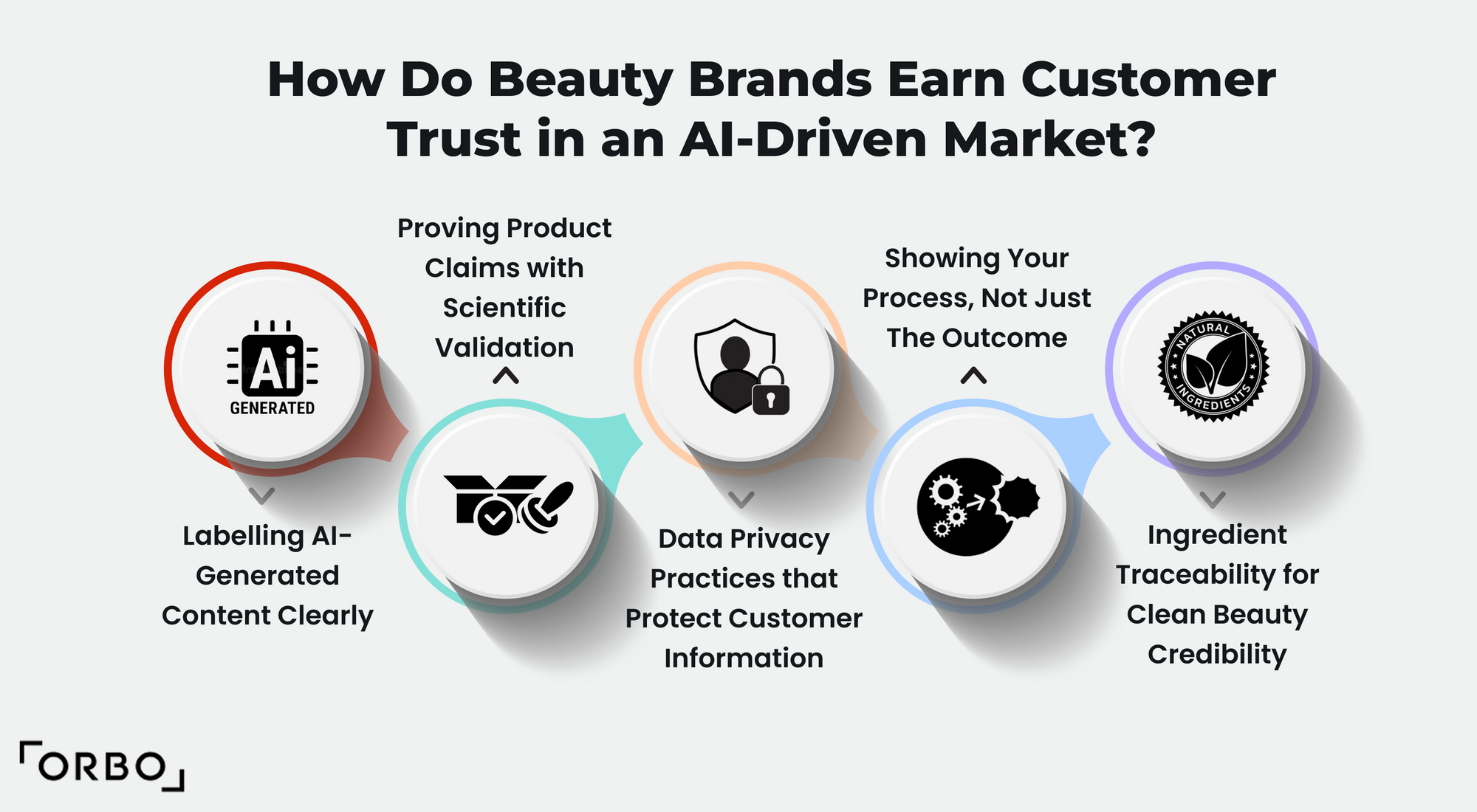
Trust is the new currency in tech-powered beauty. Here’s how brands are building it into every interaction:
Labeling AI-Generated Content Clearly
Consumers appreciate innovation, but they value honesty more. Labelling AR try-ons or AI-generated visuals builds credibility and avoids misalignment.
Proving Product Claims with Scientific Validation
Beauty tech can back your formulas with measurable results. Brands that combine clinical testing with digital diagnostics win the trust of both regulators and real customers.
Data Privacy Practices that Protect Customer Information
Facial scans, skin data, and shade preferences are sensitive. Make sure your tech stack respects privacy, gains consent, and complies with regional standards.
Showing Your Process, Not Just The Outcome
Brands that share how they build, test, and refine their products, especially when tech is involved, feel more real. That authenticity creates stronger connections.
Ingredient Traceability for Clean Beauty Credibility
From vegan to non-toxic, your clean claims need proof. Tech that maps sourcing and formulation allows you to validate claims and defend your positioning.
Can at-Home Beauty Devices Replace Professional Salon Treatments?
As more consumers explore at-home options, it’s important for brands to understand where these devices stand compared to professional treatments:
Performance Gap: Home-Use Vs Professional Tools
Most professional tools operate at higher intensity or deeper penetration levels. At-home devices must be positioned around consistency and care, not replacement.
Highlight routine benefits like glow or hydration, not deep corrective results. Make the role of each device in the routine easy to understand.
Set The Right Expectations
Consumers value honesty over hype. Let them know what’s possible from a smart brush, mask, or scanner and where the boundaries lie.
Use simple, benefit-led messaging. Reinforce outcomes through demo videos or packaging callouts.
Safety and Liability
Make sure your devices are compliant, easy to use, and come with guardrails that reduce misuse. Support and warranties go a long way.
Add usage prompts and warnings where needed. Build trust with clear care instructions and support access.
Choose Your Audience: Pro or Consumer?
If you’re selling to salons, your positioning, tech specs, and training must follow. If you’re targeting consumers, the focus shifts to ease, consistency, and packaging.
Each needs different messaging and pricing. Don’t blur the lines; clarity builds credibility.
Hybrid Models: Best of Both
Combine salon-grade treatments with at-home maintenance devices. Brands offering both increase lifetime value and create smoother pathways to repurchase.
Use this mix to drive bundling and subscriptions. It’s a smart way to deepen engagement across touchpoints.
Implementation Strategy: How to Make Beauty Tech Work for Your Business?
Adopting beauty tech isn’t just about what’s trending; it’s about what fits your brand, your team, and your customers. Start here:
Choose The Right Tech for Your Customer Base
Is your audience tech-savvy Gen Z, skincare-focused Gen X, or retail-first boomers? Match the solution to who you're serving.
Each demographic has different comfort levels and expectations. Build use cases that reflect their lifestyle and pain points.
Ensure Seamless Integration Across Channels
If your AR try-on works on mobile but not in-store, you’ve broken the journey. Prioritise platforms that support omnichannel usage like Orbo.
Consistency builds trust. Make sure the UX feels natural and connected from app to aisle.
Train Internal Teams and Measure Outcomes
Everyone from store staff to content teams should know how the tech works. Track performance across conversion, return rate, AOV, and time-to-reorder.
Provide hands-on demos and cheat sheets. Use metrics to refine and justify investment.
Avoid Common Missteps:
- Don't bolt on tech without a narrative: It should tie into your brand story and customer journey. Random features confuse more than they convert.
- Don't ignore privacy and compliance issues: Make data usage clear, gain consent, and stay updated on regulations in every market.
- Don’t forget about post-implementation support: Have a plan for updates, user feedback, and issue resolution. Ongoing support builds long-term success.
Why Orbo AI is The Beauty Tech That Suits Your Needs
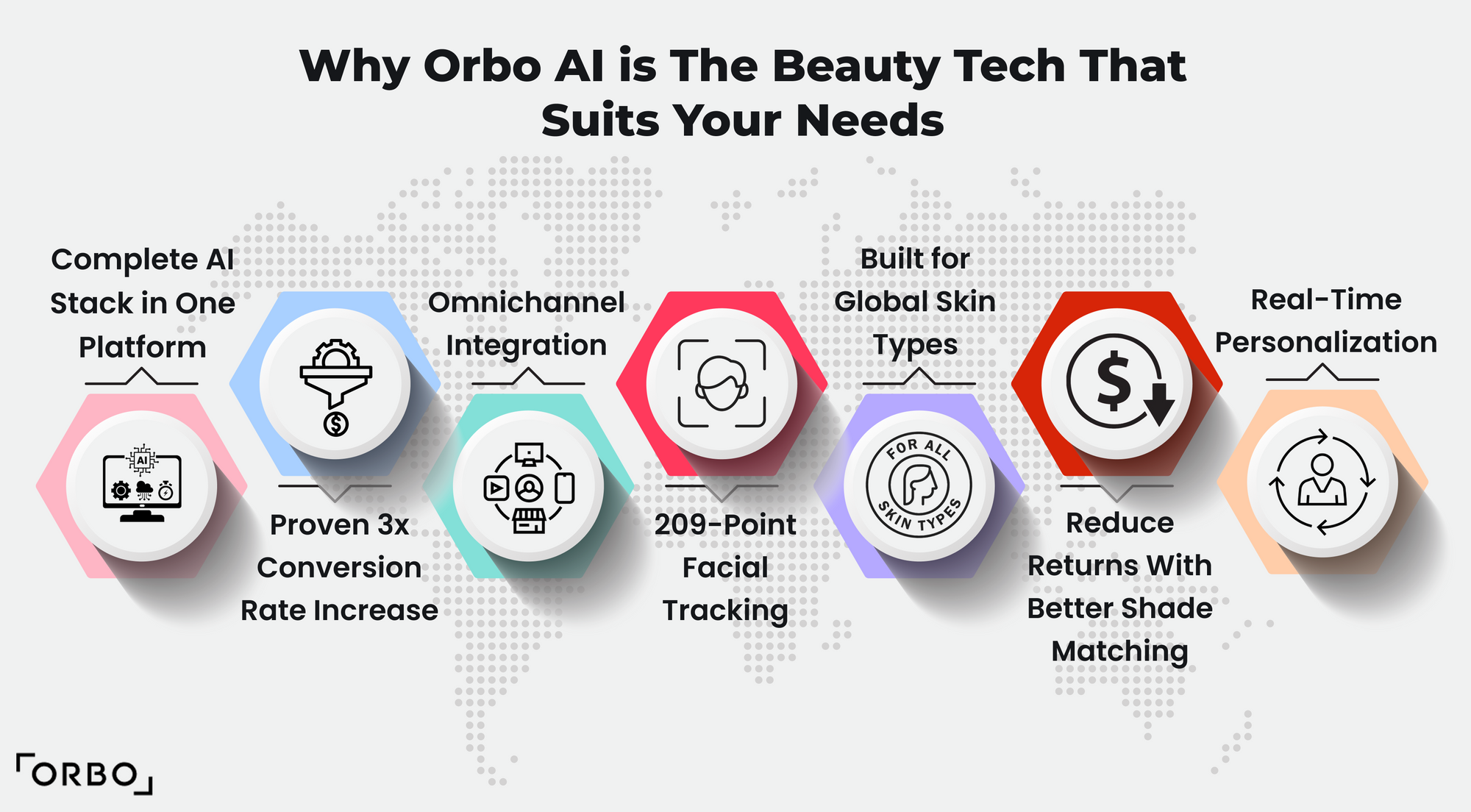
Here’s what sets Orbo apart for beauty brands ready to scale smart, connected experiences:
Complete AI Stack in One Platform
Orbo combines AI-powered skin analysis, virtual makeup, hair try-ons, and natural language search (via BeautyGPT) into one integrated platform. This eliminates the need to juggle multiple vendors and allows your brand to create seamless, data-rich experiences that convert online or offline.
Proven 3x Conversion Rate Increase
Beauty brands that implement Orbo’s tech have seen up to a threefold increase in conversion rates. By enabling personalised, real-time product testing and matching, Orbo builds shopper confidence and reduces hesitation at the point of purchase.
Omnichannel Integration
Whether your customer is browsing on your website, exploring products through a mobile app, or engaging in-store through a smart mirror, Orbo ensures consistency. Its flexible deployment allows your brand to create connected, cross-channel experiences that keep users engaged throughout the journey.
209-Point Facial Tracking
Unlike generic overlays, Orbo’s high-precision facial landmark detection (209 points) allows virtual try-ons to mirror the contours, lighting, and real-time expressions of the customer, delivering a natural and believable preview of each look.
Built for Global Skin Types
Inclusivity is built into Orbo’s architecture. It supports all six Fitzpatrick skin types, ensuring product recommendations and AR simulations are accurate across diverse audiences. This helps your brand meet global beauty standards while championing equity.
Reduce Returns With Better Shade Matching
Orbo’s shade-matching engine uses AI to identify the best-fit product tones based on a customer’s actual skin tone and undertone, helping reduce product mismatches, drop-offs, and costly returns.
Real-Time Personalization
The system analyzes over 16 skin parameters, including oiliness, hydration, sensitivity, and pigmentation. Based on this data, it delivers personalised product and routine suggestions in real time, making every interaction meaningful and relevant.
Ready to see everything in action?
Book a demo with Orbo and discover how your brand can use beauty tech to grow conversions, reduce returns, and deliver standout experiences. Tailor recommendations based on 16+ skin features, boosting engagement and loyalty.
FAQs
Do I Need Custom Hardware to Start with Beauty Tech?
No. Platforms like Orbo let you integrate AR and AI directly into your digital storefront or app.
Can Beauty Tech Really Impact My Bottom Line?
Yes. Higher conversions, fewer returns, and better retention all add up to better ROI.
Is This Tech Scalable for Global Audiences?
Absolutely. Orbo’s AI stack is designed to support localisation, skin tone accuracy, and regional compliance.
How Long Does It Take to Implement Beauty Tech Solutions?
Implementation timelines vary by complexity. Simple AR try-ons can go live in weeks, while full diagnostic and AI integrations may take a few months. Working with pre-built platforms can significantly reduce setup time.
Will Beauty Tech Work With Our Existing CRM or E-Commerce Stack?
Yes, most leading beauty tech platforms offer APIs or SDKs for smooth integration with your CRM, e-commerce tools, or app infrastructure, making it easy to sync customer data, personalise experiences, and track ROI.